Quartz & Crystals
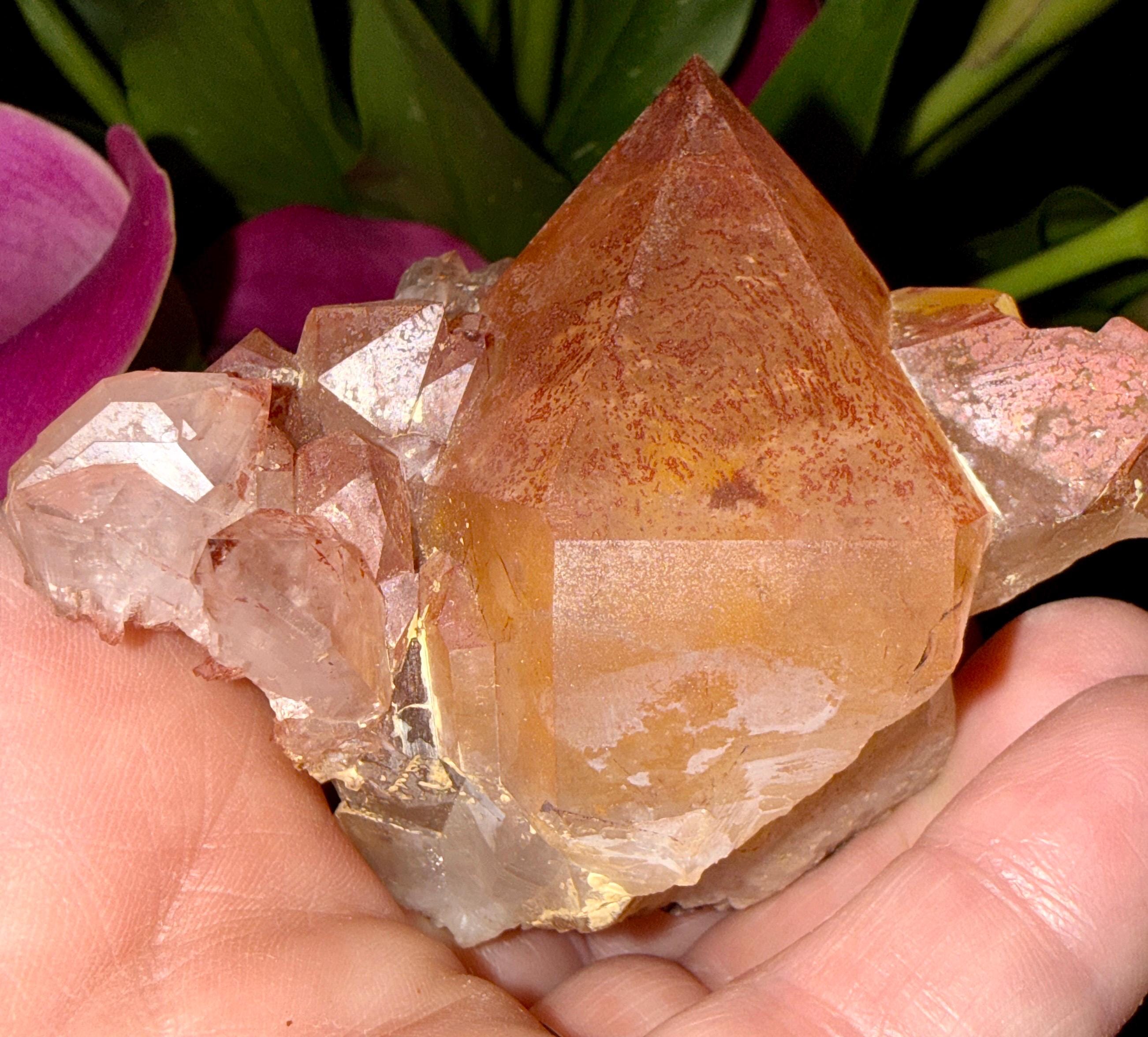
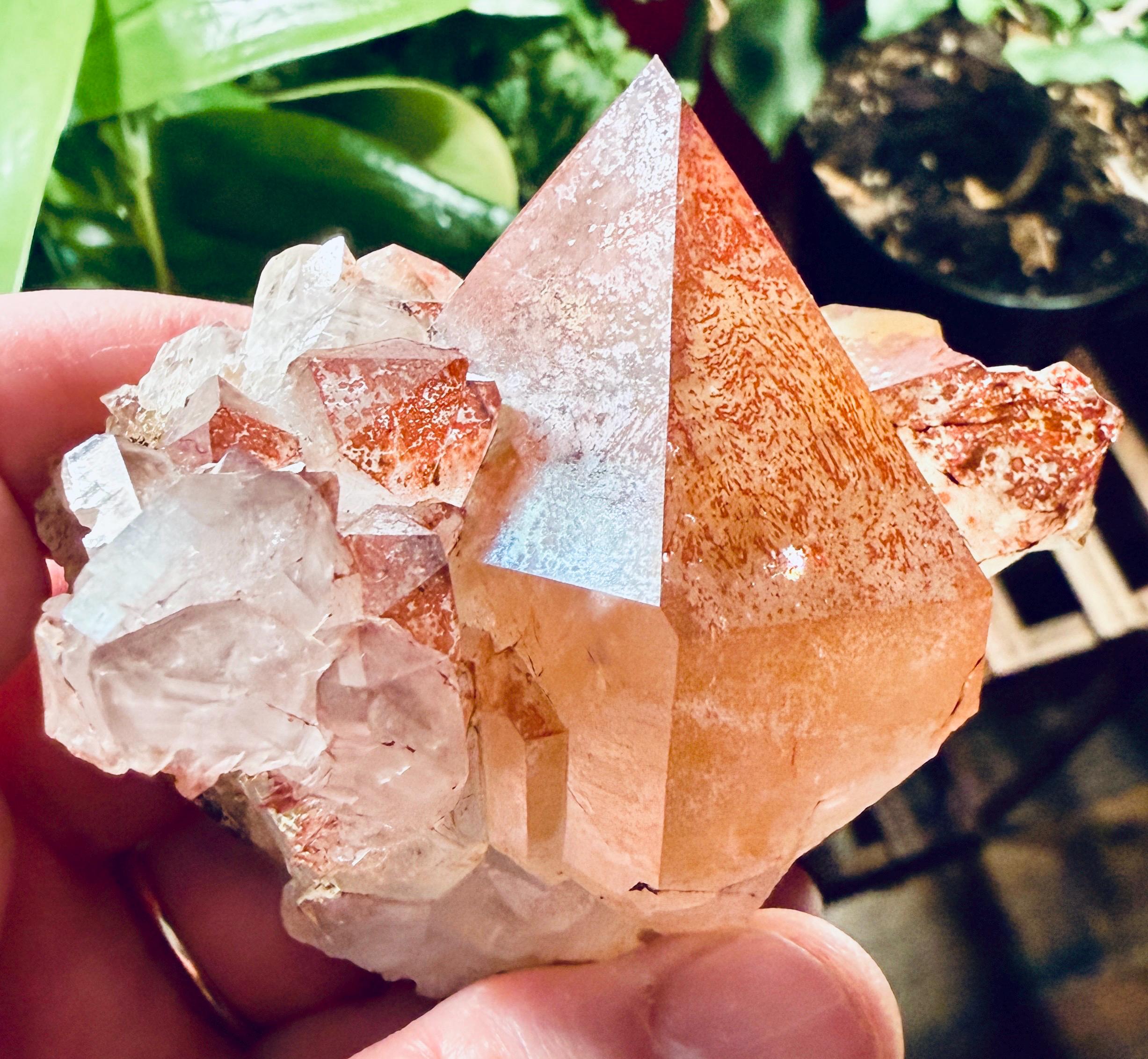
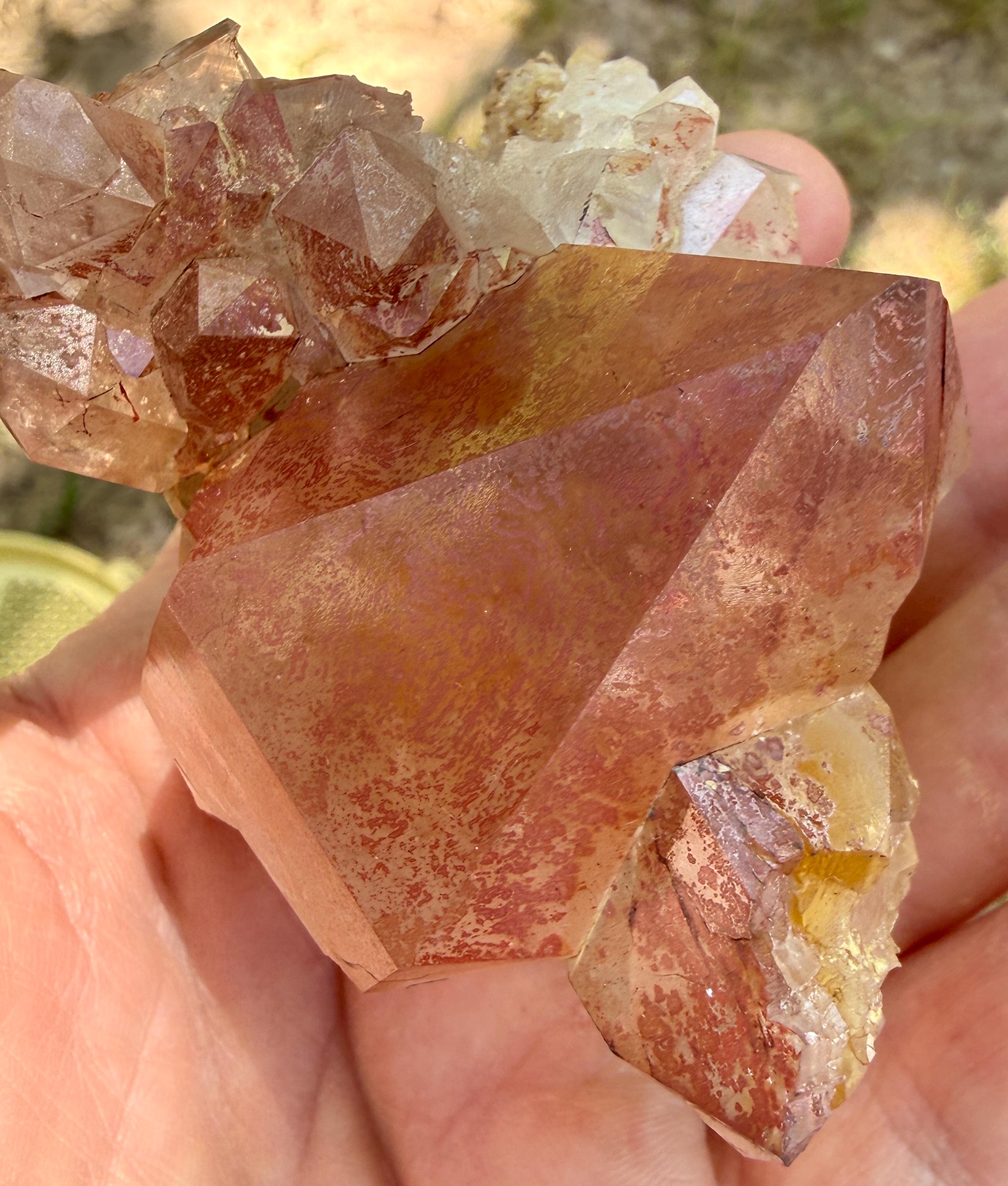
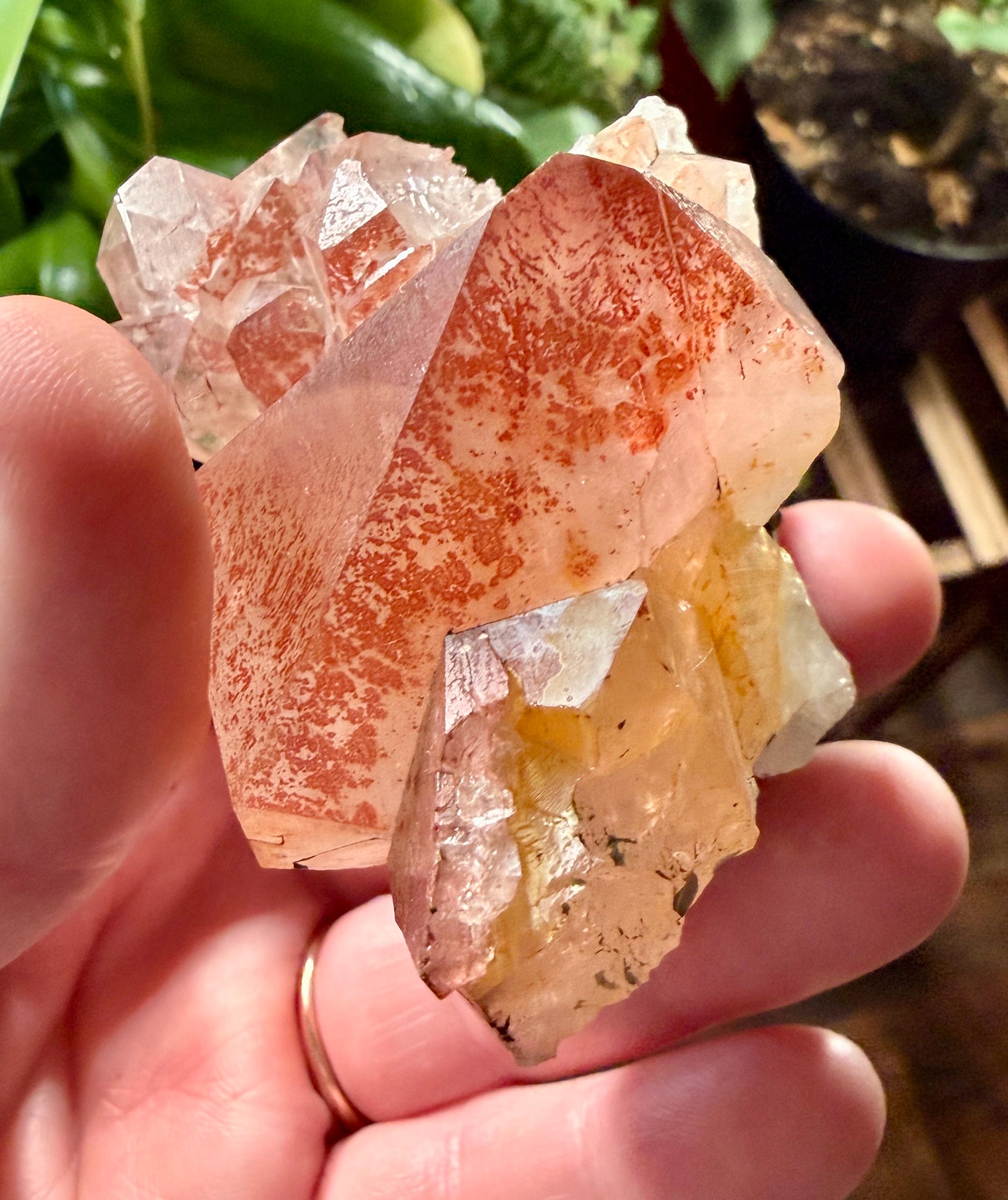
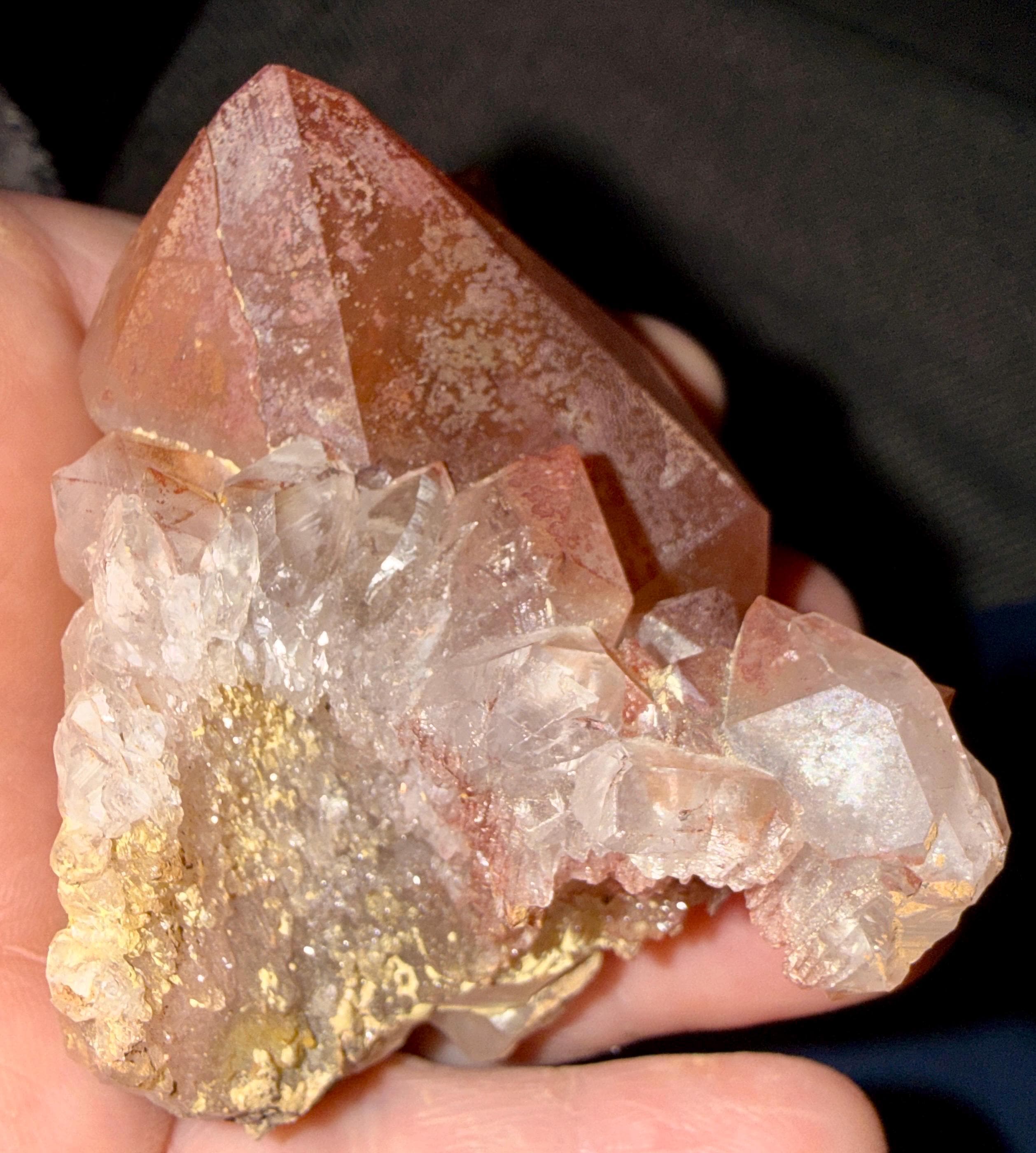
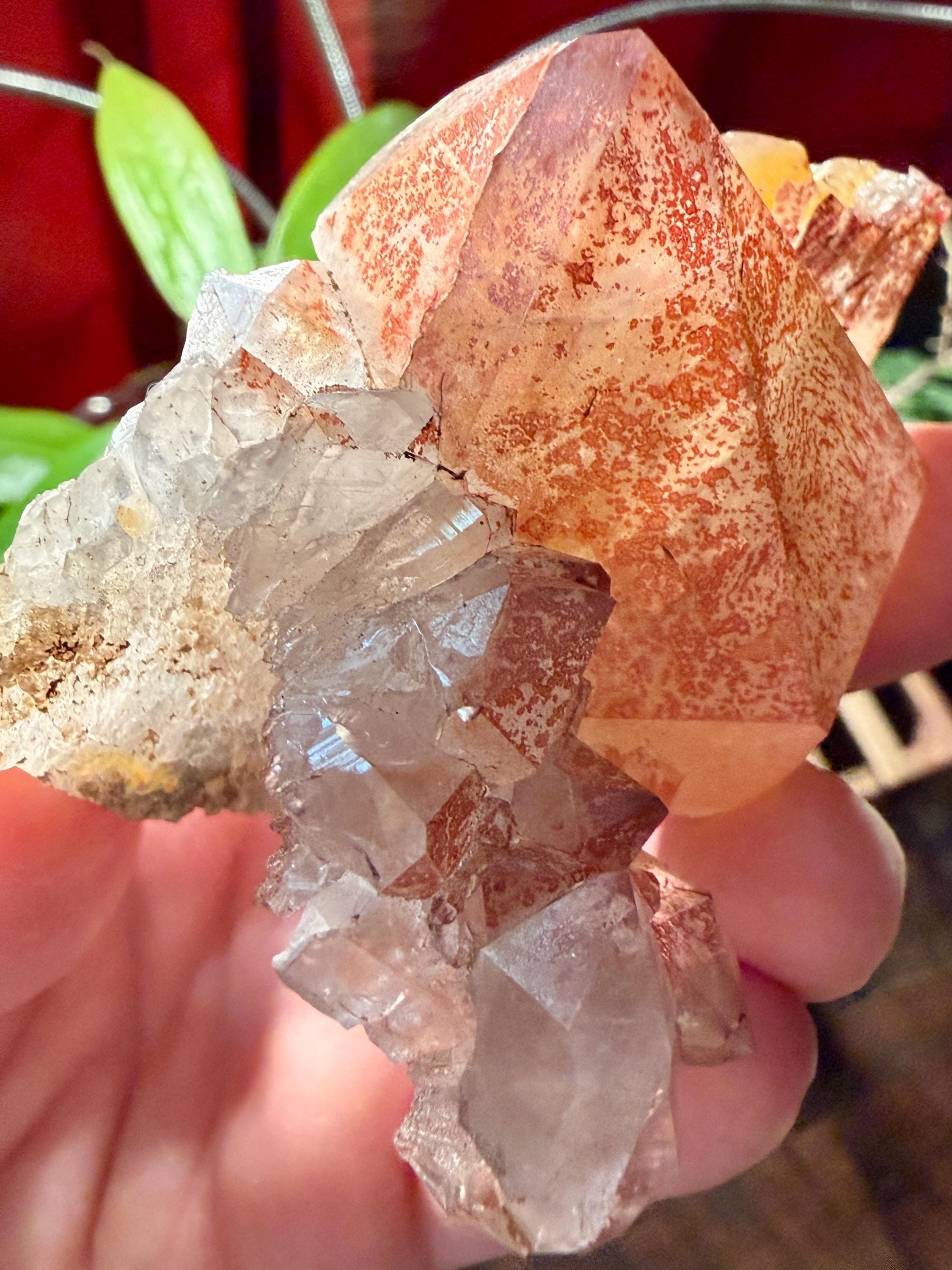
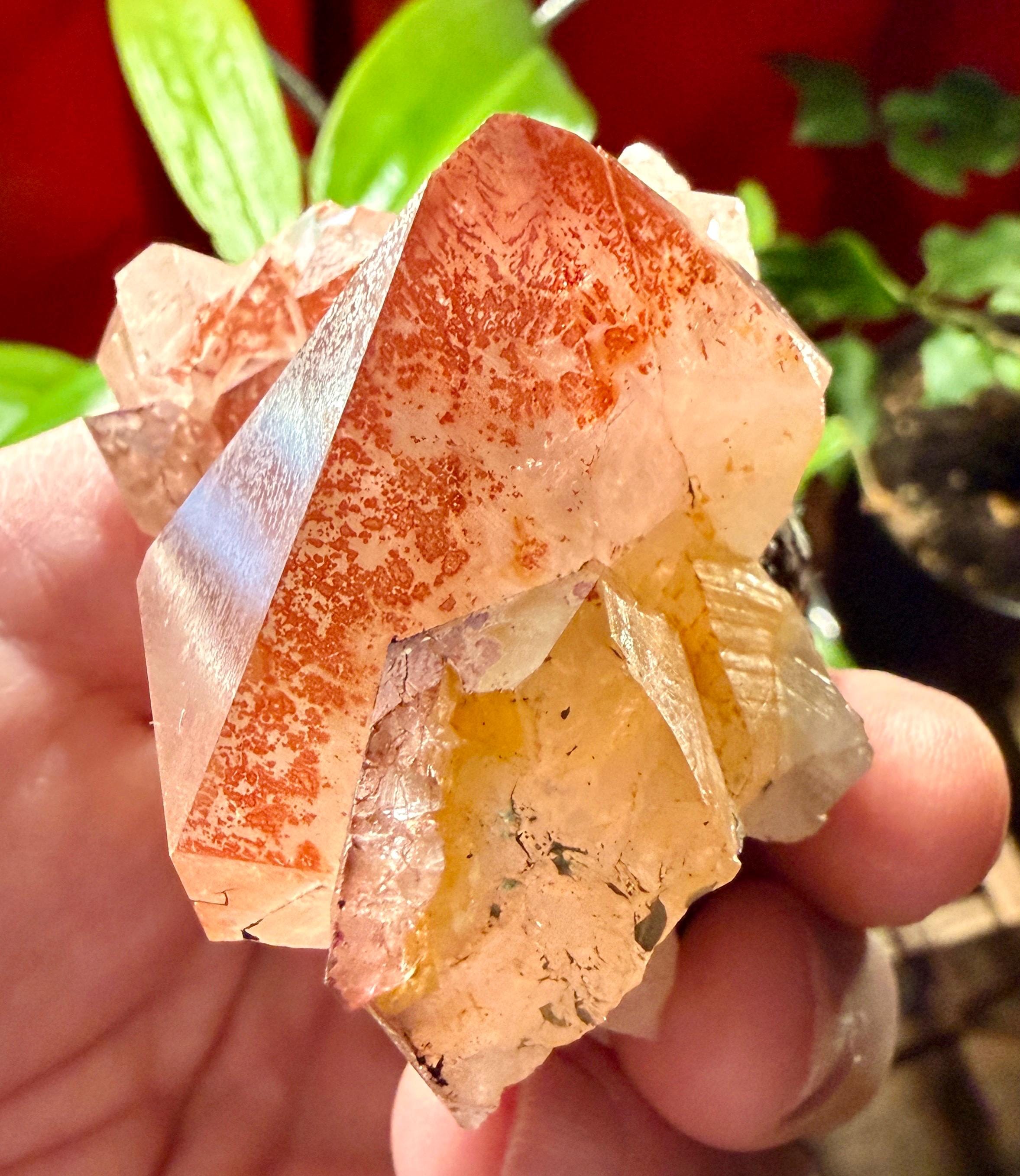
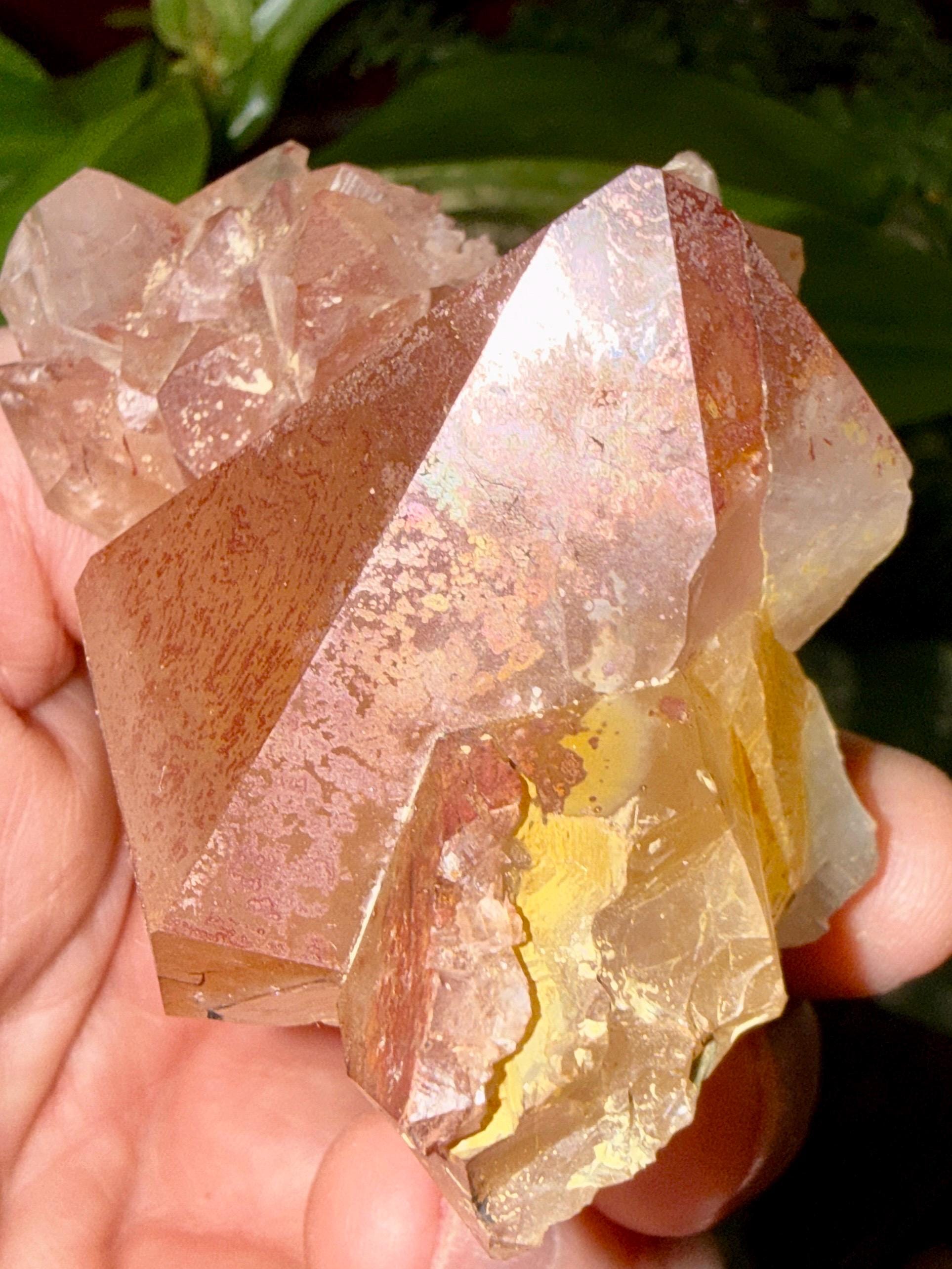
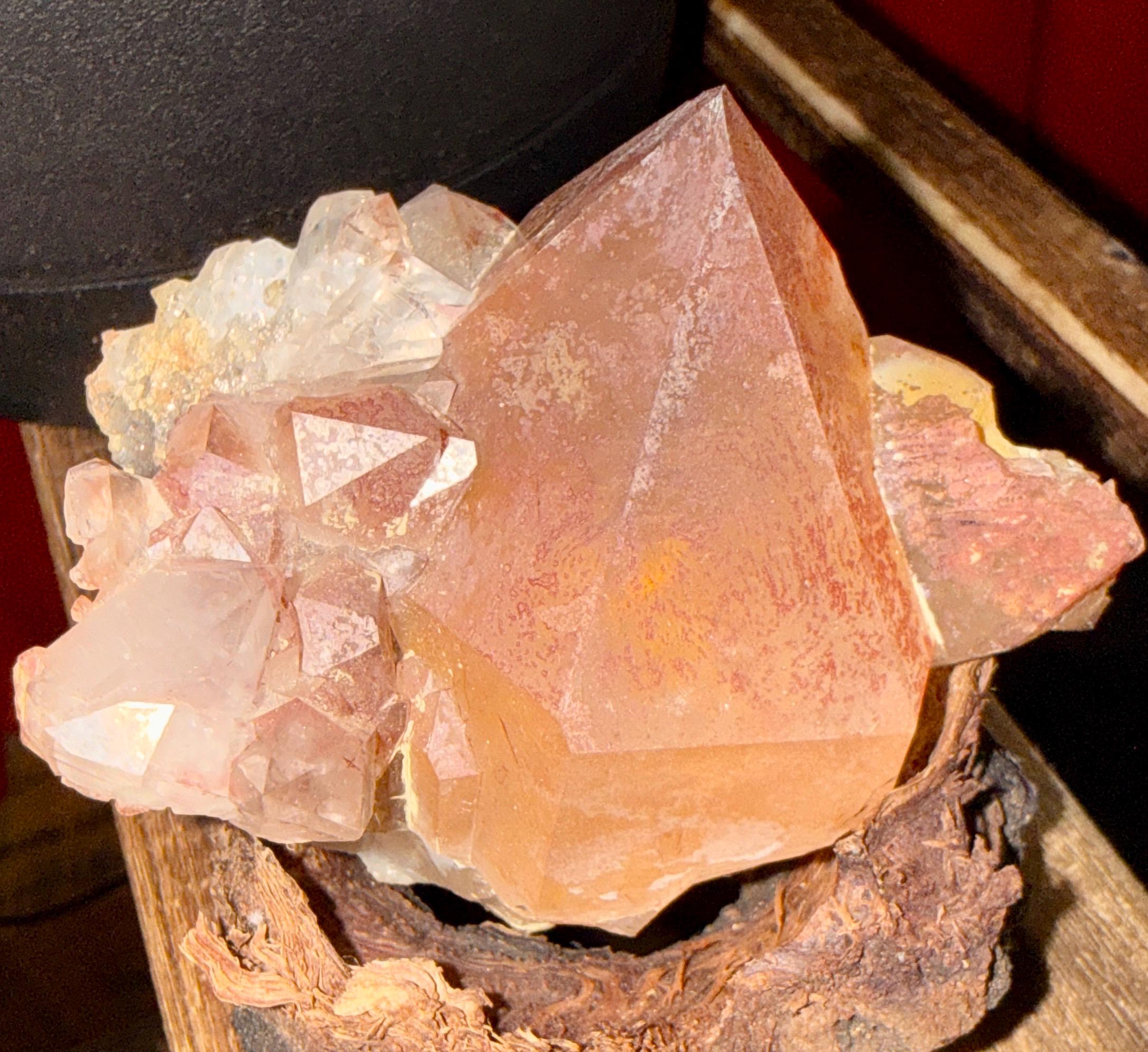
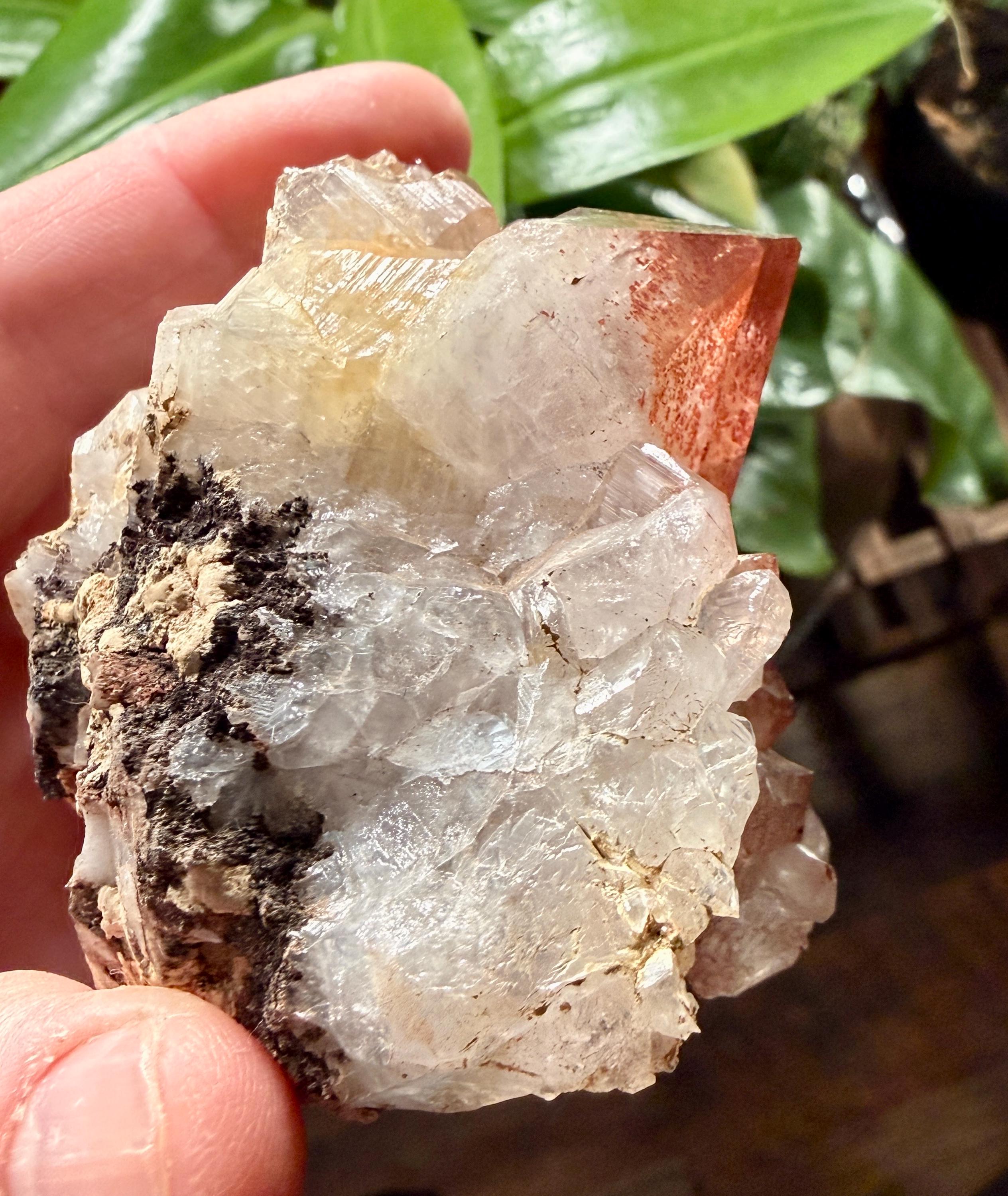
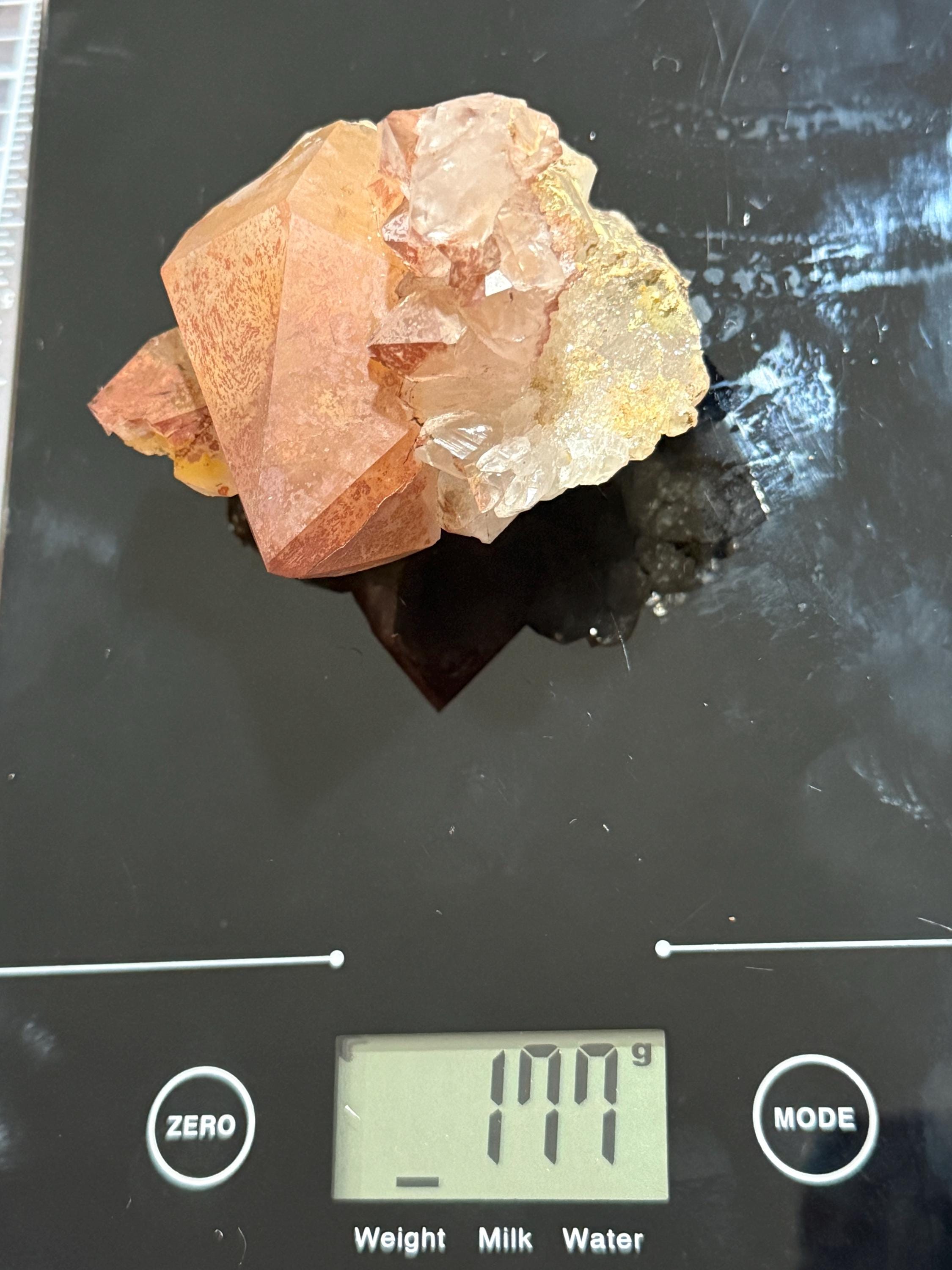
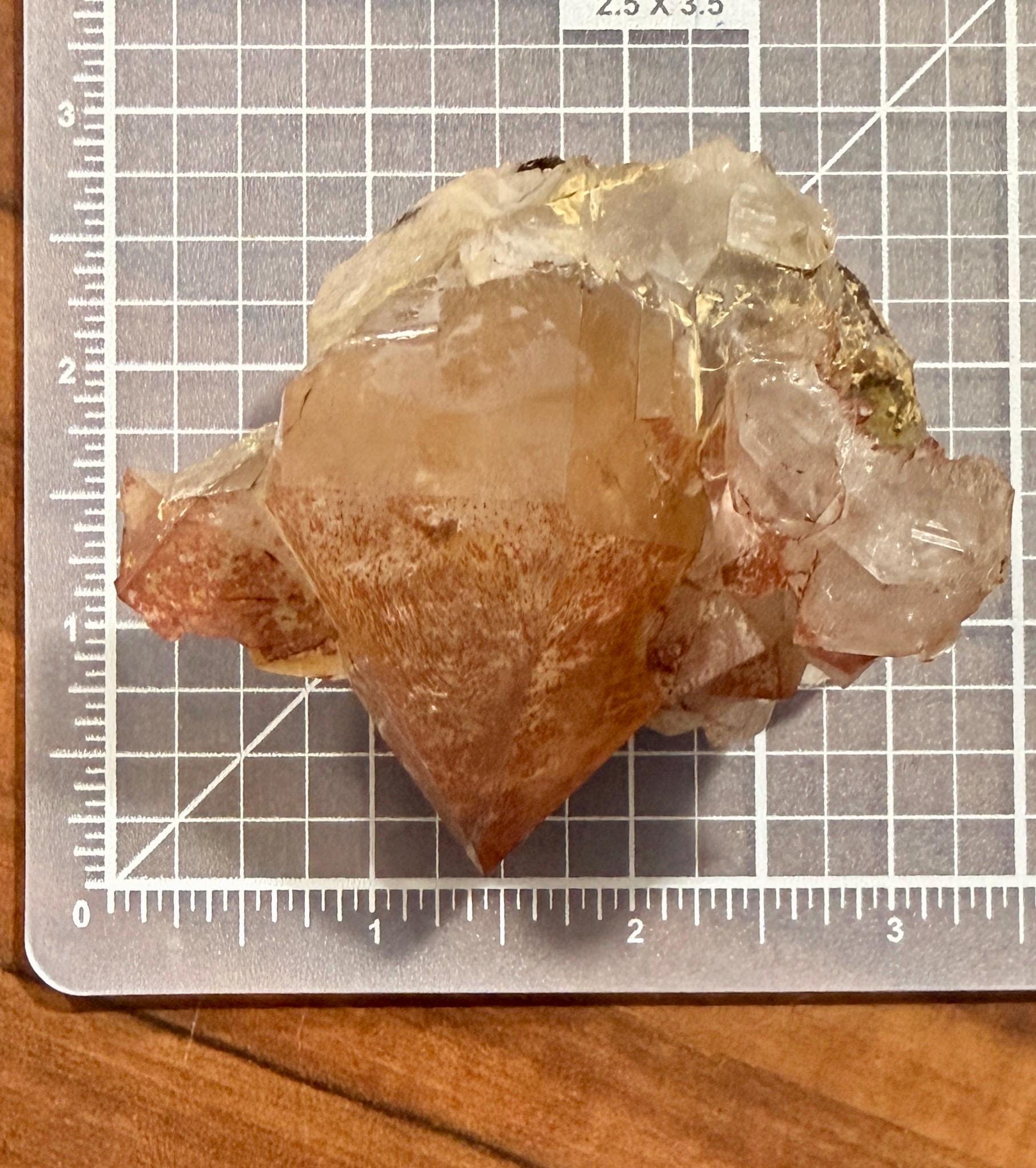
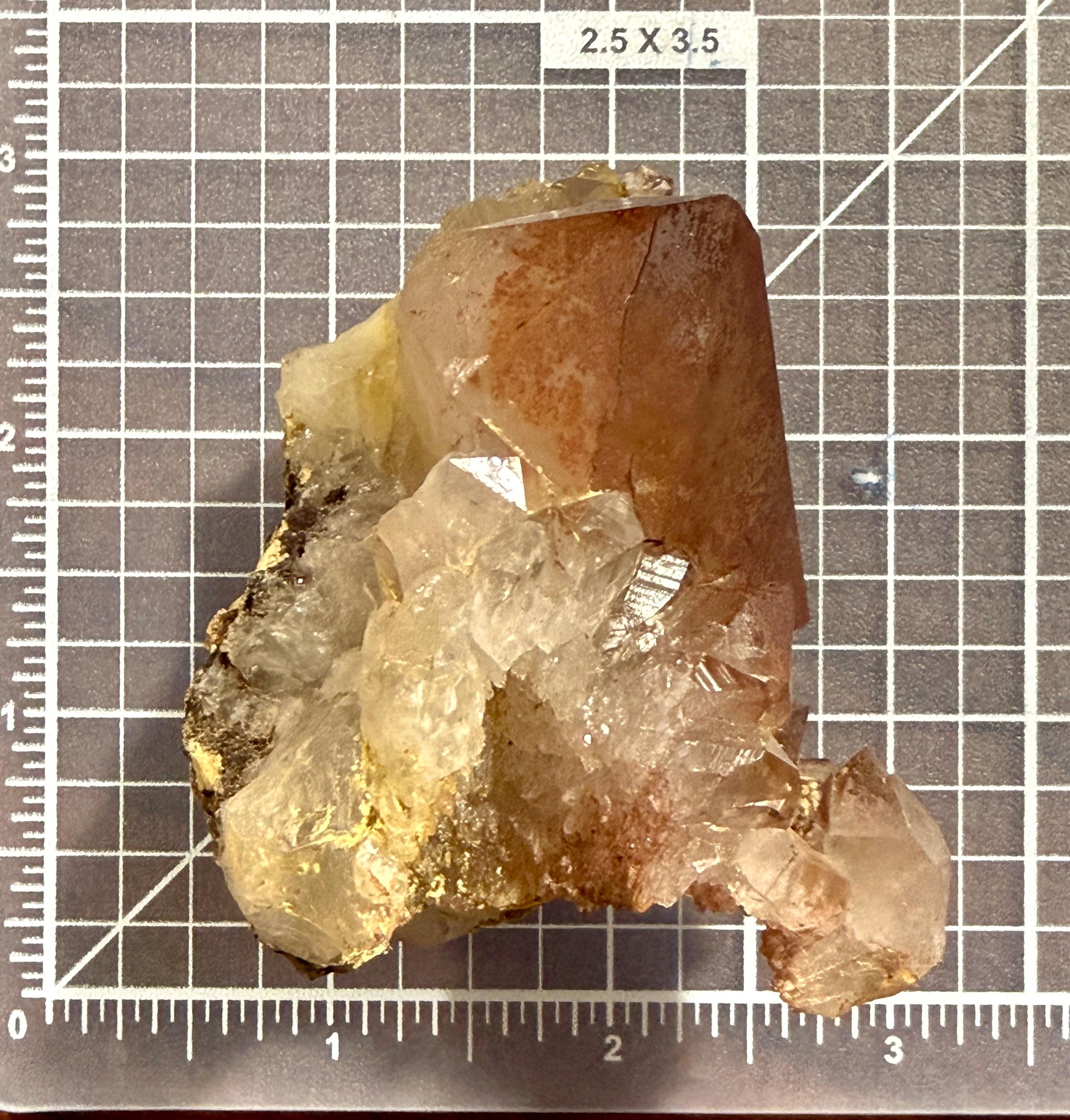
Ferruginous Quartz Cluster • Peach Hematoid Quartz • Natural Iron‑Oxide Mineral Specimen • 177 grams
$62.00
-
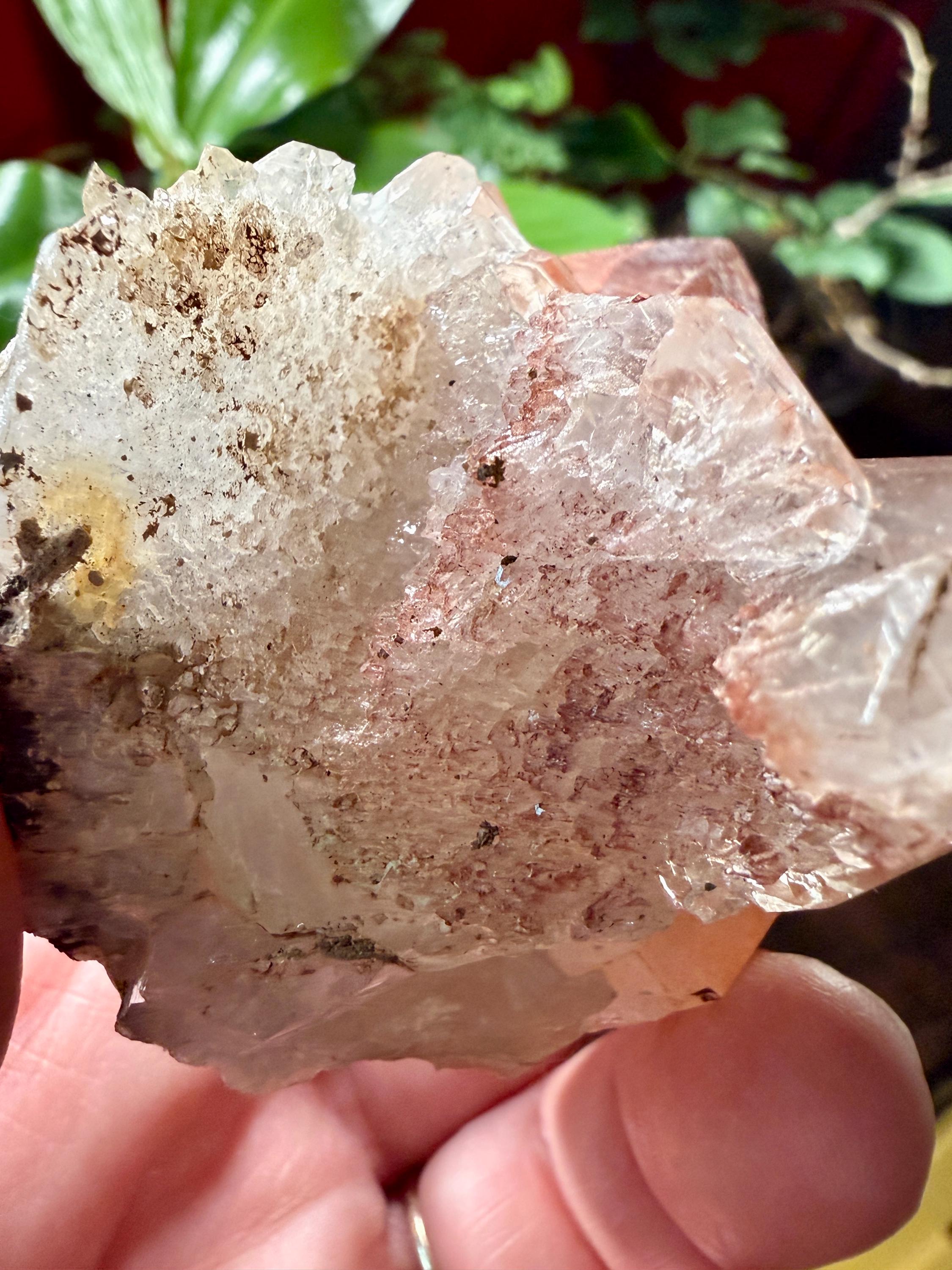
DetailsThis natural ferruginous quartz cluster shows warm orange and soft pink tones created by iron minerals that became part of the crystal as it formed. The color comes from microscopic hematite platelets and tiny goethite inclusions—particles only a few microns thick that align along the crystal’s growth planes and tint the quartz from within. The main point rises above the cluster with gentle, naturally varied coloration.
How it formed:
This quartz developed in a silica‑rich cavity deep underground. As the crystal points grew, iron‑rich fluids moved through the pocket, leaving behind microscopic particles of hematite and goethite that became trapped inside the quartz. During later stages of growth and weathering, additional iron settled onto the crystal faces, creating the natural speckled pattern seen on some surfaces. These tiny freckles of iron oxide are a normal, authentic feature of ferruginous quartz and reflect how the mineralizing fluids moved through the cavity over time.
HISTORICAL NOTE:
According to NCpedia’s history of the iron and steel industry in North Carolina, early ironworkers relied on natural surface clues to locate usable ore. Hematite and limonite—the primary iron ores worked in the region—often stained nearby quartz and soil in red, orange, and yellow tones. This discoloration helped workers identify iron‑rich ground long before geological surveying existed, making ferruginous quartz a familiar sight around early furnace and forge sites in the Carolinas.
DETAILS:
• Weight: 177 g
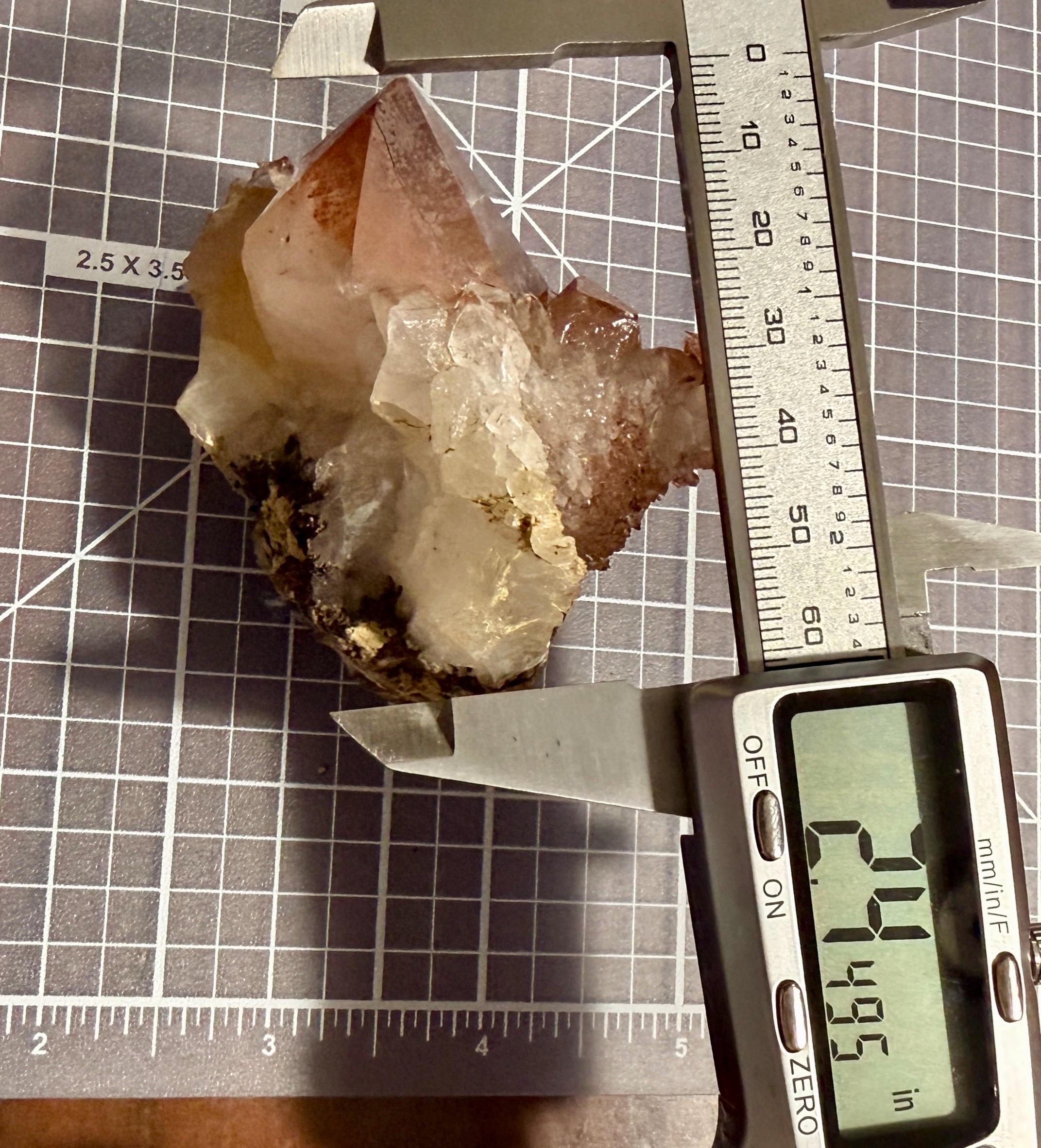
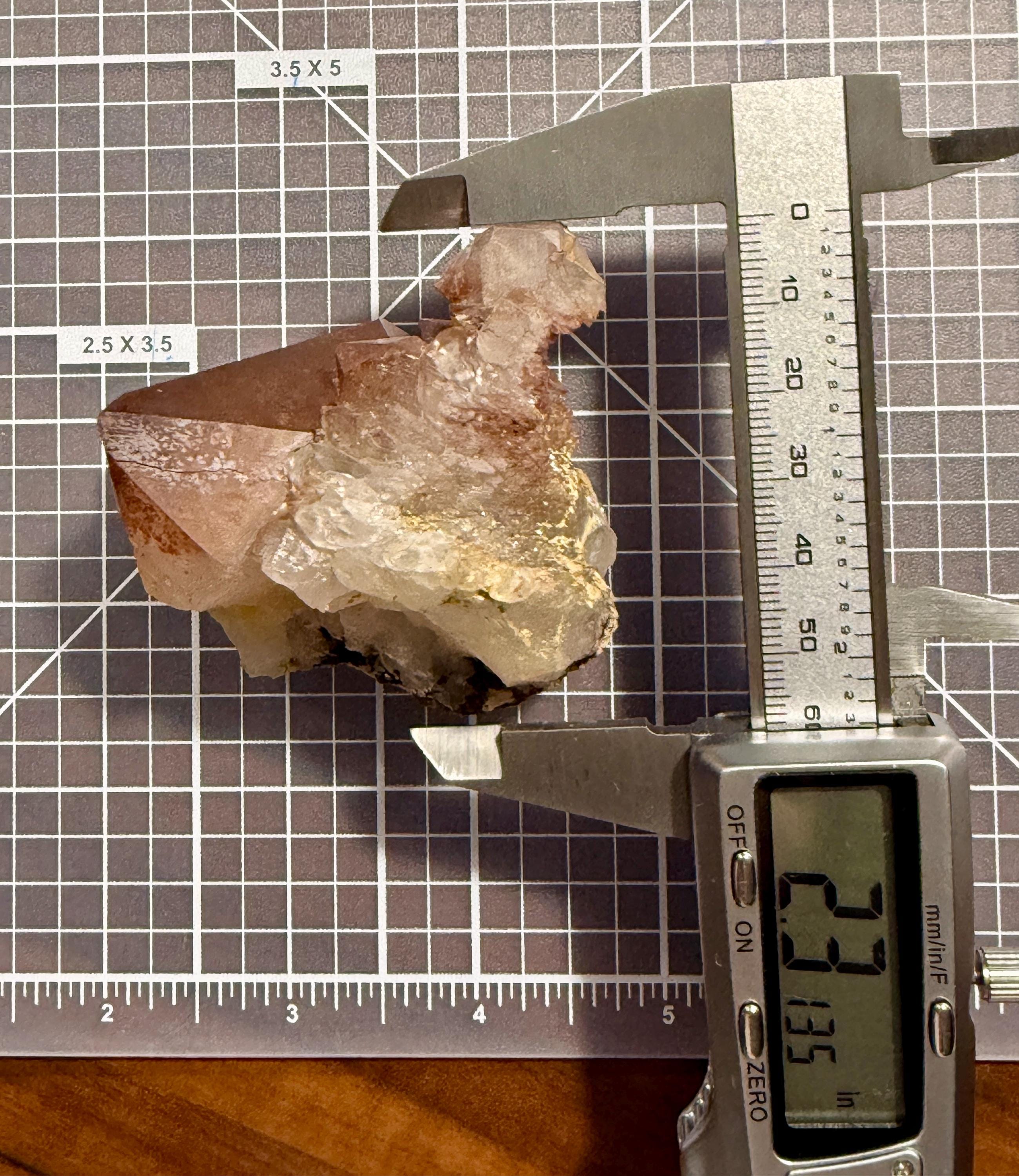
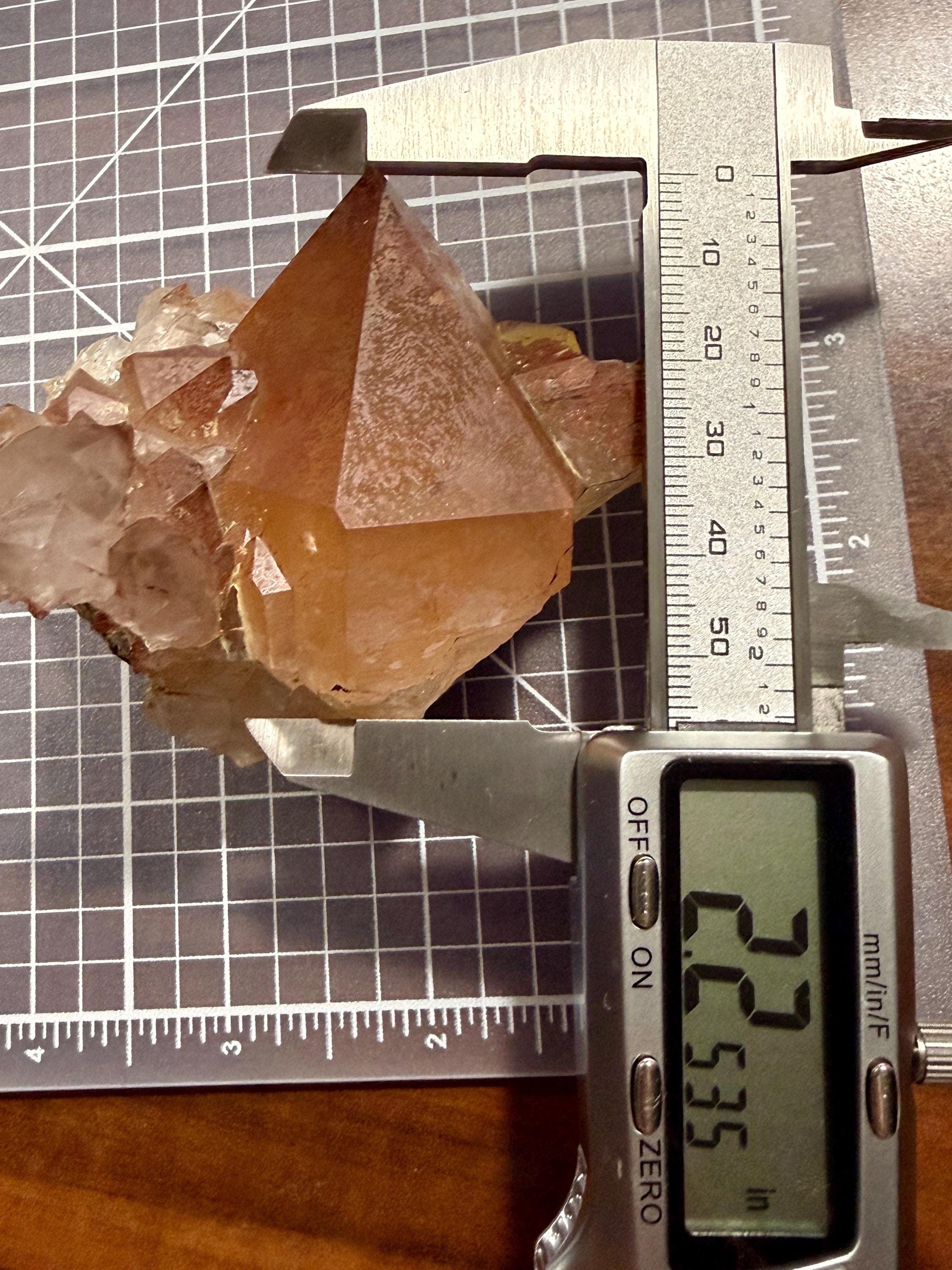
• Size: 3.5 in × 2.75 in × 2.2 in
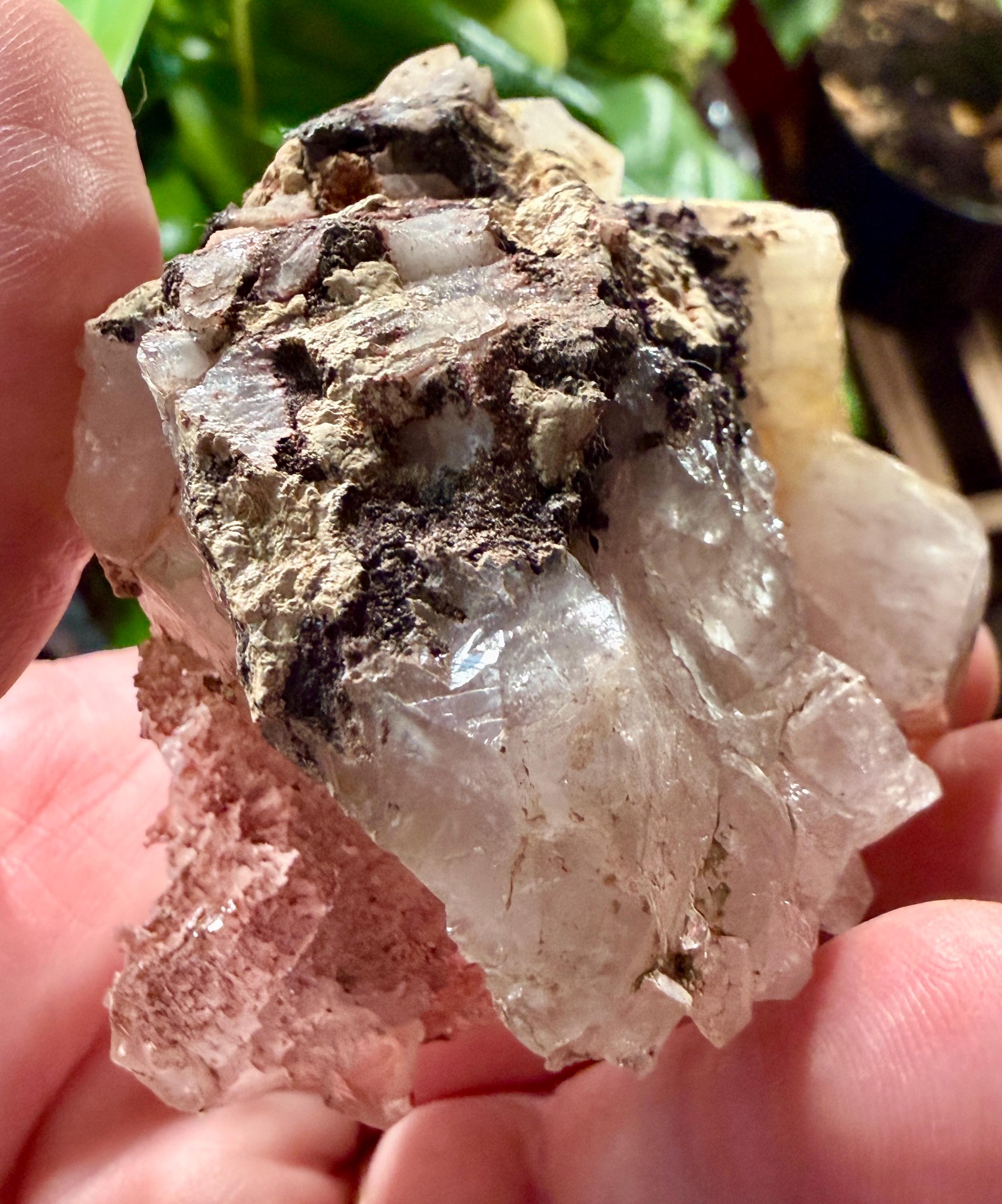
• Natural, unpolished mineral specimen
• Cluster with a dominant main point
• Warm orange and soft pink tones from natural iron oxides
MATERIALS:
Quartz, hematite, goethite, natural iron oxide -
Shipping & Policies
Related Products